





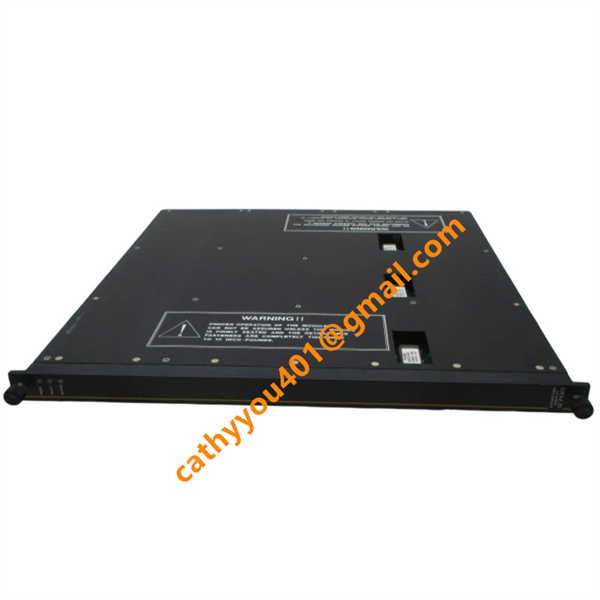
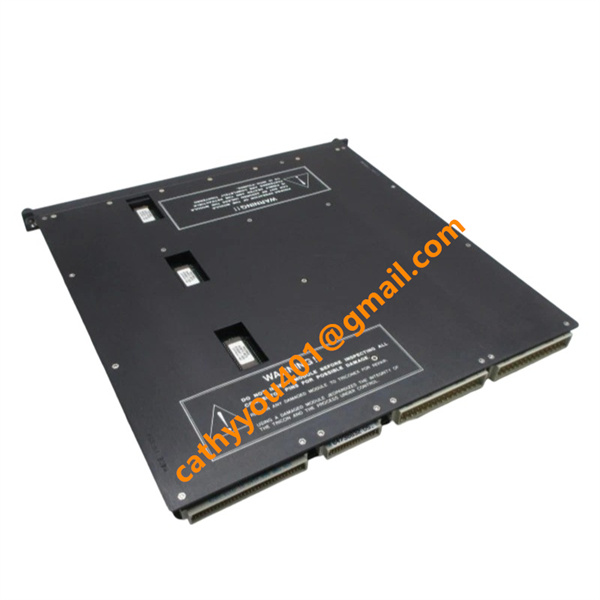







Description
-
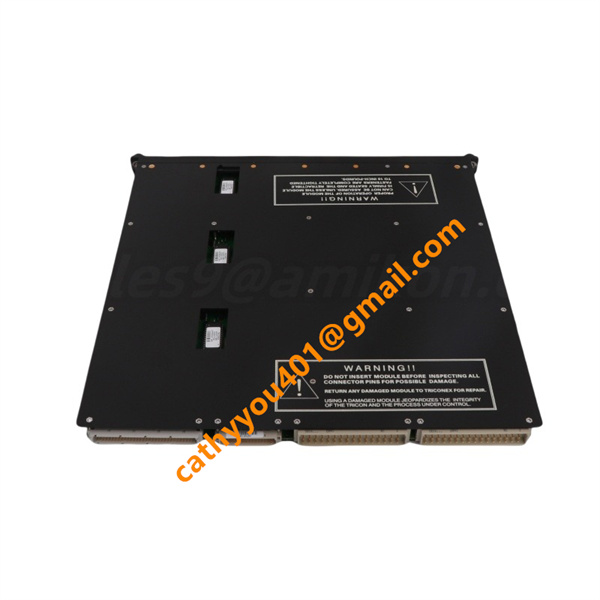
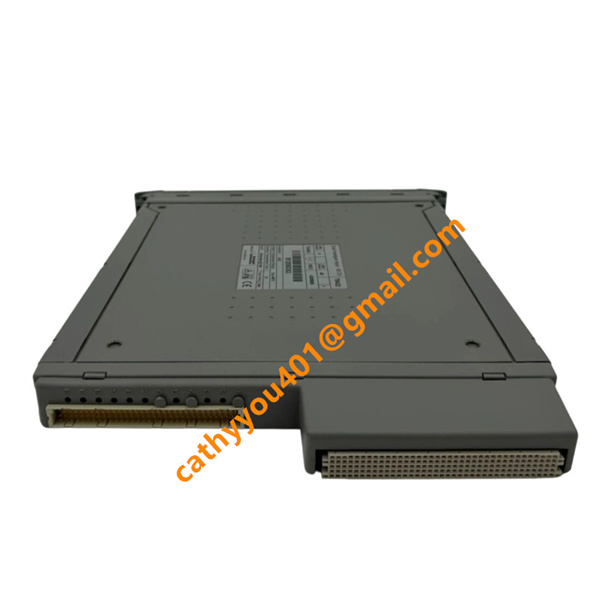
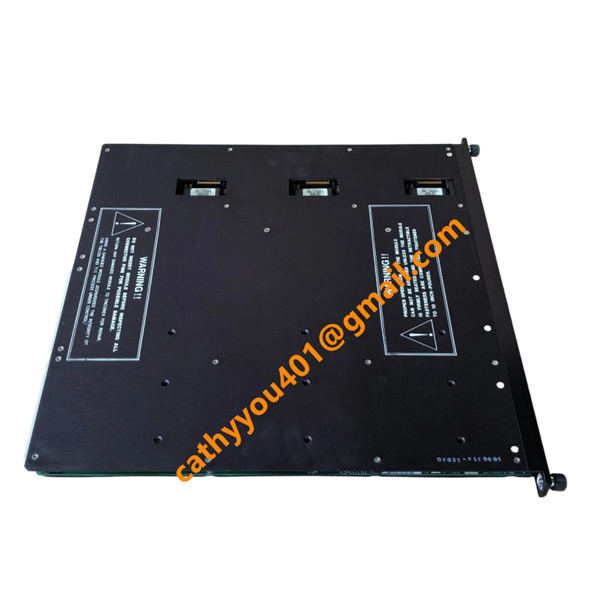
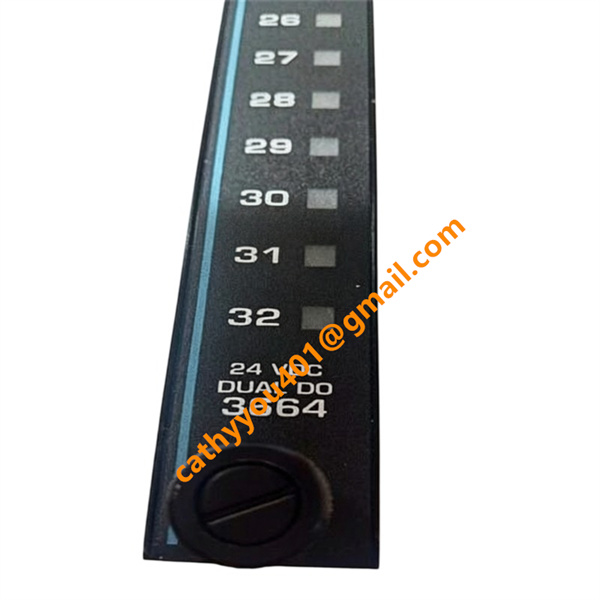
BrandTriconex
-
Model3806E
-
Product NameTricon TMR Analog Output Module
-
Place of OriginUnited States
-
HS Code85389000
-
Dimensions170 mm × 105 mm × 50 mm
-
Weight1.2 kg
-
Operating Temperature-40 °C to +70 °C
-
Storage Temperature-40 °C to +85 °C
-
Power Supply24VDC
-
Warranty12 month
-
Product StatusNew brand
Backed by abundant in-stock inventory and nearly 20 years of industry experience, our company stands as a leading player in the industrial control sector.We offer an extensive range of industrial control products covering numerous models. Should you have any other requirements, please feel free to contact us, and we will respond to you promptly.
Our main brand:
1.ABB's module cards, touch screens, controllers, etc., such as PP846 touch screen, IGCT starting with 5SHY, PM starting controller, AI, DO starting input/output module, SP starting Bailey module, etc
2.GE's module card CPUs, such as VMIC starter, IS200, IS215, IS400, IS420 series, etc,
3.Emerson's card components and EPRO probes, Westinghouse 1C series, Honeywell CC series, Schneider 140 series, Envision full series, Bentley 3500 series, Rexroth motors and drives, and Foxboro small modules.
Implements triple-modular redundant data reception via three independent processor lanes.Input data: Digital command setpoints for analog output channels.Maximum update rate: ≤20 ms.
Onboard diagnostics: Open-loop detection, short-circuit monitoring, overcurrent and overtemperature protection
1. Pre-Commissioning Inspection
Wear an anti-static wristband and take electrostatic protection measures when handling the module.
Verify the module model, hardware revision and spare parts conform to design specifications.
Inspect rack slots, backplane connectors and terminal blocks for damage, contamination and poor contact.
Check field wiring against construction drawings, and ensure cable shielding and earthing are properly implemented.
Measure loop resistance of each aoutput channel using a multimeter. Confirm load resistance complies with technical requirements: maximum 825 Ω for 4–20 mA channels and maximum 50 Ω for 20–320 mA high-current channels. Eliminate potential short-circuit hazards on output loops.
Confirm the external loop supply voltage does not exceed 32 VDC.
2. Module Installation & Power-on Verification
Install the 3806E module into the specified rack slot and tighten the front panel fixing screws.
Energize the cabinet power supply and observe the status indicators on the module.
Wait for module initialization and confirm the PASS LED illuminates solid green. If the FAULT LED activates, inspect backplane connection and module compatibility.
Launch TriStation software to establish communication with Tricon main processors. Confirm the controller recognizes the 3806E module without hardware fault alarms.
3. Software Configuration
Import or update hardware configuration via TriStation, and assign a valid slot address to the 3806E module.
Configure channel parameters: set 6 channels as standard 4–20 mA outputs and 2 channels as 20–320 mA high-current outputs.
Define engineering scaling ranges, fail-safe output values and enable channel diagnostic functions as required.
Compile the configuration and download it to the Tricon controller. Clear all module-associated fault alarms upon completion of downloading.

4. Manual Channel Forcing Test (Loop Calibration)
Activate the manual forcing function in TriStation with authorized access.
Test each channel sequentially at setpoints of 0%, 25%, 50%, 75% and 100%.
Measure the actual output current at field terminals with a multimeter, and record both commanded values and measured readings.
Validate that output accuracy stays within 0.25% of full scale.
Test onboard diagnostics by temporarily creating open-loop and short-circuit conditions, and verify relevant alarms are generated in TriStation.
Release all forced values after point-by-point testing, and restore the system to automatic control mode.
5. End-to-End Functional Test
Download the user control logic program to Tricon main processors.
Execute automatic control sequences. Confirm the 3806E correctly receives setpoint commands and transmits corresponding analog signals to field actuators.
Observe the operation of valves and actuators to ensure no abnormal signal fluctuation or excessive response delay.
Monitor TriBus backplane communication to guarantee stable data interaction between main processors and the 3806E module with no communication failures.
6. Fault Simulation Test
Simulate loop overload, open circuit and short-circuit faults on output channels.
Confirm the module generates diagnostic alarms and activates protection mechanisms including overcurrent and overtemperature protection.
Verify fault messages are displayed normally within TriStation and forwarded to the upper HMI/SCADA system.
Remove simulated fault conditions and confirm alarms can be cleared either automatically or manually.
7. Post-Commissioning Confirmation
Clear all temporary test alarms and forced variables.
Archive the final hardware configuration, control program and commissioning documents.
Document all measured signal data, channel test results and records of abnormality handling.
Implement continuous operation monitoring for a designated period to track module temperature and LED operating status.
Submit test reports and as-built configuration files to relevant personnel for handover.
Frequently Asked Questions (FAQ)
1.How fast will you reply to my inquiry?
We process all inquiries efficiently and will respond promptly once we receive your message.
2.Do you carry large inventory of industrial control parts?
We maintain massive ready stock of mainstream automation spare parts to shorten lead times.
3.Can you source discontinued or obsolete PLC & DCS modules?
Absolutely.
We specialize in sourcing hard-to-find, obsolete and out-of-production industrial control components.
4.Do you inspect goods before shipment?
Every product undergoes thorough inspection before packing and dispatch.
5.Can you ship orders worldwide?
We provide global shipping with flexible logistics for urgent and regular orders.