




.jpg)







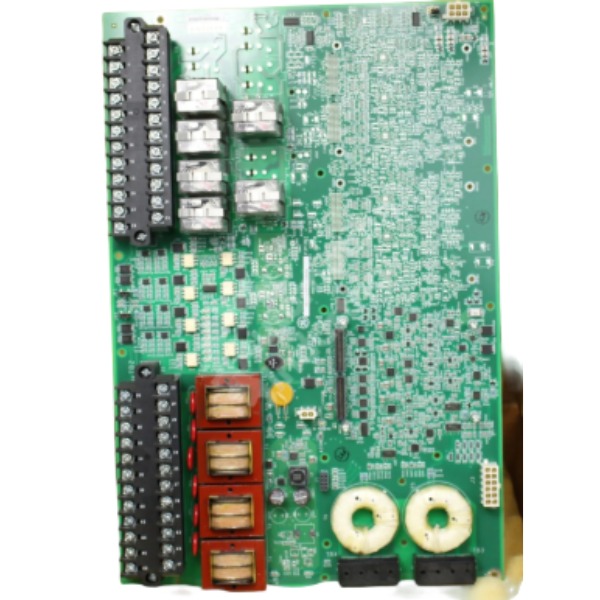
Description
-
BrandGE
-
ModelIS210BAPAH1A
-
Product NameAnalog Processor Module
-
Place of OriginUnited States
-
Customs HS Code85371011
-
Power Supply5V DC, ±15V DC from backplane
-
Dimensions235mm × 108mm × 27mm
-
Weight0.96 kg
-
Operating Temperature-30°C ~ +65°C
-
Storage Temperature-80°C ~ +99°C
-
Warranty12 month
-
Product Statusnew
Analog Input Channels of GE IS210BAPAH1A (BAPA Analog Processor Module)
1. Channel Quantity & Hardware Structure
The module has 18 configurable signal conditioning channels and 24 physical A/D input paths. Each channel can be independently configured via ToolboxST software. The channel circuit adopts differential input architecture, which effectively suppresses common-mode interference on field wiring. Each channel has independent signal conditioning circuit and isolated conversion unit, supporting TMR triple redundant deployment for safety turbine control loops.
2. Supported Input Signal Types (per channel software configurable)
DC voltage: ±10V DC
Current signal: 4–20mA transmitter signal
Thermocouple: J, K, T, E type thermocouple low-level mV signal
Vibration / acoustic AC signal: for broadband acoustic and vibration RMS calculation (0–5000Hz)
3. Input Impedance
Voltage input: high input impedance, preventing load effect on voltage sensors
4–20mA current input: built-in precision sampling resistor, converts loop current into voltage signal for A/D sampling
4. Signal Conditioning Circuit Inside Each Channel
Each analog input channel integrates multi-stage signal conditioning:
1. Surge and transient protection circuit to suppress field lightning surge and high-frequency spikes.
2. Instrument amplifier for signal amplification and common-mode noise rejection.
3. Hardware low-pass filter to eliminate 50/60Hz power frequency interference; filter parameters can be further adjusted in software.
4. Bias removal circuit to eliminate DC offset of weak thermocouple signals.
5. A/D Conversion Performance
A/D converter resolution: 16-bit
Sampling mode: synchronous scanning of all channels
Accuracy: ±0.01% full scale at 25℃
Typical channel update cycle: 10ms
The module completes A/D conversion locally, and can perform pre-calculation such as broadband RMS value for acoustic and vibration signals on board before uploading data to the main controller.
6. Isolation Design
Channel-to-channel galvanic isolation and channel-to-backplane galvanic isolation are implemented. It cuts off ground potential difference and ground loop noise between different field sensors and the control rack, preventing interference from cross-talk between channels. The isolation structure protects the module’s internal circuit when field sensor loops have abnormal overvoltage.
7. Built-in Channel Diagnostic Function
Each analog input channel supports continuous real-time self-diagnosis:
Overrange detection: alarm when signal exceeds configured upper limit (e.g. >20mA, >+10V)
Underrange detection: alarm when signal is lower than configured lower limit (e.g. <4mA for 4-20mA loop, indicating open circuit or sensor failure)
Signal quality monitoring: detect abnormal noise, signal jump and circuit abnormality
Diagnostic results are uploaded to ToolboxST and system HMI, and can trigger maintenance alarms without interrupting other healthy channels.
8. Configuration Method
All channel parameters are set in ToolboxST engineering software:
Select signal type (voltage / current / thermocouple / acoustic)
Set engineering unit scaling, range and alarm threshold
Configure filter time constant and sampling parameters
Enable or disable channel fault detection
After configuration, compile and download to the BAPA module, and verify channel readings online.
9. Typical Application of Analog Input Channels
These channels collect key turbine measurement signals:
Thermocouple temperature of combustion chamber and exhaust gas
Pressure transmitter 4–20mA signals for inlet, fuel and lubricating oil
Vibration sensor signals for bearing vibration monitoring
Acoustic monitoring signals for combustion dynamics monitoring
All measured values are used for turbine closed-loop control, over-temperature protection, combustion monitoring and safety interlock.
10. Important Constraints
The channel configuration must match the actual field sensor type; wrong signal type setting will cause measurement error or false fault alarm.
For TMR redundant configuration, three BAPA modules sample the same field analog signal separately, and the main controller performs 2-out-of-3 voting on the three groups of sampled values.
Wiring must separate analog signal cables from high-power cables to reduce electromagnetic interference.
The module does not provide external loop power for all sensors; check sensor power supply mode during site wiring.

GE IS210BAPAH1A Technical Specifications
Power Specifications
Module Operating Power: 24–28VDC, maximum operating current 0.24A
Sensor Excitation Output: 12–18.5VDC output voltage, 2.9–4.3mA output current
Auxiliary Power Interface: Supports 125VDC power supply for driving on-site auxiliary control circuits
Signal Channels & Supported Signal Types
Analog Input Resources: 18 configurable signal conditioning channels, 24 physical A/D sampling channels
Compatible Input Signals: ±10V DC voltage signals, 4–20mA standard current signals, J/K/T/E-type thermocouple temperature signals
Analog Buffer Output: Output range -10~+10V DC, maximum load capacity 5mA
Acoustic Monitoring Function: Onboard algorithm calculates 0–5000Hz broadband RMS energy, realizing turbine combustion acoustic monitoring
A/D Conversion & Performance Parameters
A/D Conversion Resolution: 16-bit high-precision conversion
Sampling Mechanism: Full-channel synchronous scanning sampling
Measurement Accuracy: ±0.01% full scale (under 25℃ standard temperature)
Standard Signal Update Cycle: 10ms
Communication Interface
Hardware Interface: Dual independent PHY Ethernet ports (PHY0, PHY1)
Communication Protocol: IONet high-speed deterministic industrial network, dedicated for Mark VIe system data interaction
Isolation & Protection Performance
Isolation Design: Complete galvanic isolation between channels and between channels and ground, avoiding cross-channel interference and ground loop faults
Signal Processing: Built-in professional signal conditioning circuits, supporting DC bias elimination and AC signal amplification
EMC Performance: Optimized electromagnetic suppression design, adapting to high-interference industrial field environments
Safety & Certification Standards
Safety Certification: IEC 61508 SIL3 safety level certification, UL Class 1 Div 2 hazardous area certification
Explosion-proof Grade: Ex ic ec[ic] IIC T4 Gc
Diagnostic & Hardware Characteristics
Self-Diagnosis Function: Real-time onboard diagnosis of module power status, network communication status and analog channel operating conditions
Status Indication: Front-panel LED indicators for intuitive display of module health status and channel fault alarms
Online Monitoring: Supports real-time fault query and status diagnosis via ToolboxST software
Matching Terminal Board: IS210SAMBH1A
Functional Boundary & Application Scope
This module undertakes field analog signal conditioning, amplification filtering and high-precision A/D conversion. It supports local data pre-calculation such as vibration and acoustic RMS values for gas and steam turbines. All core turbine control algorithms and safety logic judgment are executed by the Mark VIe main controller. It is widely used in gas turbine and steam turbine closed-loop control, combustion state monitoring, equipment vibration measurement and safety interlock protection scenarios.

DS200TDAH1BHD
DS200TCRAG1ACC
DS200DTRAG1AAA
DS200DTBBG1ABB
DS200SDCCG4AFD
DS200TCDAG1BDB
IS220PTURH1B
C60G01HCHF8FH6PM8FP6PU6PWXX
DS200TCQCG1BHF