





F2AE09AAB3B9459F92F82580297F8D67.jpg)
.jpg)







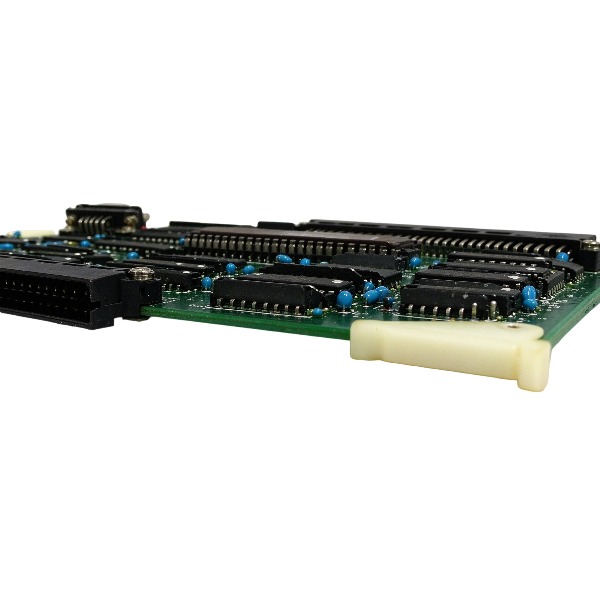
Description
-
BrandHITACHI
-
ModelAEH020A
-
Product Name8-Channel Analog Input Module
-
Place of OriginJapan
-
Customs HS Code853890
-
Power Supply120 mA @ 24VDC
-
Dimensions229 mm × 178 mm × 51 mm
-
Weight0.5 kg
-
Operating Temperature0℃ ~ +50℃
-
Storage Temperature-20℃ ~ +70℃
-
Warranty1year
-
Product Statusnew and original
Application Cases of HITACHI AEH020A
Power plant auxiliary system monitoring and control
Mounted inside boiler auxiliary control cabinets to gather analog signals including water level, pressure, temperature and flow from feedwater pumps, fans and valves. It converts raw field measurement signals into digital data for DCS processing and outputs control signals to adjust actuator operation. It is widely adopted in thermal power plant renovation projects for closed-loop control of auxiliary processes.
Chemical plant continuous process measurement and control
Deployed on chemical reaction skids and pipeline process control loops. It accepts 4-20mA signals from pressure transmitters, temperature sensors and level transmitters, and delivers control outputs to regulating valves. It enables continuous monitoring and automatic tuning of reaction temperature, pressure and liquid level to guarantee stable continuous chemical production.
Water treatment plant automatic control
Applied to sewage and potable water treatment facilities. It collects readings from online water quality sensors, flow meters and tank level sensors, and outputs control signals for dosing pumps and blowdown valves. It supports automatic chemical dosing, liquid level interlocking and flow regulation to minimize manual operation in water treatment workflows.
Metallurgy factory field signal acquisition and interlock
Used for furnace auxiliary control and cooling water systems on metallurgical production lines. It captures temperature and flow signals from cooling circuits and runs interlock protection logic. It triggers alarms and protective outputs once abnormal parameters are detected to avoid equipment damage caused by overheating.
Factory production line skid integration and data collection
Suitable for standalone machine skids in automotive, packaging and food industries. It collects sensor data from conveyors, positioning cylinders and safety switches, and drives local actuators. It communicates with upper-level controllers over Modbus RTU to upload equipment status, production counts and fault alarms, achieving distributed local control.
Legacy Hitachi control system upgrade and replacement
It serves as a replacement for outdated I/O modules of legacy Hitachi control systems during plant modernization. It maintains the original cabinet layout and collects field analog and digital signals without complete field cable rewiring, shortening the transformation schedule and cutting plant downtime.
Oil & gas remote skid monitoring
Installed on small oil and gas well skids and pipeline pressure monitoring stations. Operating under wide temperature conditions, it collects pipeline pressure, temperature and flow data, transmits real-time information to the central control room via Modbus RTU, and executes local safety shutdown interlocks upon overpressure or overtemperature conditions.
Building HVAC central control system
It acquires temperature, humidity and air pressure signals from air handling units and sends control instructions to dampers and variable frequency drives. It implements closed-loop regulation of air volume and temperature for central air conditioning systems in workshops and factories.

Confirm System Compatibility
Validate the host controller model and backplane slot specifications of the Hitachi DCS/PLC platform. The AEH020A must be compatible with the corresponding rack firmware version. Verify if the CPU supports hot swapping and backplane data communication; mismatched firmware may result in communication breakdown or failure to identify the module.
Analyze Field Signal Types and Quantity
Count the on-site quantity of analog input, analog output, digital input and digital output points. Confirm signal types such as 4-20mA, 0-10V, thermocouple or RTD signals. Check whether the built-in I/O channels of the AEH020A can fully satisfy measurement and control demands, and reserve 10%~20% spare channels for future system expansion.
Check Working Environmental Conditions
Assess site conditions including ambient temperature, humidity, dust, vibration and corrosive gas. Confirm that the operating temperature range of the AEH020A matches the cabinet environment. For workshops with heavy vibration, high humidity or corrosive atmosphere, adopt reinforced cabinet installation measures and prevent direct exposure of the module to harsh surroundings.
Confirm Communication Requirement
The AEH020A communicates with upper systems via Modbus RTU. Confirm communication parameters including baud rate, parity check and slave address. Calculate the RS485 bus cable length and total node quantity on the bus. Ensure communication load stays within the module’s capacity and prevent signal attenuation caused by excessively long wiring.
Evaluate Control Loop & Response Speed
Determine whether the application requires high-speed closed-loop regulation or simple slow-speed monitoring. The AEH020A features fixed A/D conversion and scan cycles. Verify that the module’s response speed meets control loop requirements for pressure, liquid level, temperature and flow. Validate sampling cycle parameters for applications demanding rapid response.
Power Supply Matching
Review the module’s rated power supply specification. Confirm the cabinet power module can supply stable DC power, and calculate total power consumption of the AEH020A together with other I/O modules in the rack. Install appropriate fuse protection to avoid module reset triggered by voltage fluctuation or power drop.
Safety and Isolation Requirements
Confirm whether galvanic isolation is required between field channels and internal logic circuits. Evaluate the need for surge protection for field transmitters in thunder-prone regions. Deploy external surge suppressors when needed to protect the AEH020A from lightning surges and electromagnetic interference.
Cabinet Installation and Layout
Check the dimensions of the cabinet mounting slot, DIN rail mounting condition and ventilation clearance. Maintain sufficient space for heat dissipation. Separate high-power cables from low-level signal cables to mitigate EMI interference.
Spare and Maintenance Plan
Choose genuine Hitachi AEH020A modules. Prepare backup modules for critical production lines. Confirm local after-sales support and delivery lead time. Keep spare parts on hand to minimize downtime once module faults occur.
Verify Project Budget and Certification
Confirm module cost and supporting accessories such as terminal blocks, communication cables and wiring connectors. Check whether the module certificates comply with local industrial standards to pass factory acceptance tests.

FAQ about Hitachi AEH020A
Q: What is Hitachi AEH020A?
A: Hitachi AEH020A is an industrial PLC I/O module manufactured by Hitachi, designed for Hitachi programmable controller systems to handle digital input and output signals in factory automation.
Q: What series does Hitachi AEH020A belong to?
A: AEH020A belongs to Hitachi H-series PLC module family, widely adopted in Hitachi legacy control systems.
Q: What industries use Hitachi AEH020A?
A: It is commonly applied in semiconductor equipment, packaging machines, water treatment, metallurgy, manufacturing production lines and old factory automation retrofit projects.
Q: What is the core function of Hitachi AEH020A?
A: The AEH020A I/O module collects digital field signals and executes output control commands, bridging the PLC CPU and on-site sensors, valves and actuators.


.jpg)

.jpg)
.jpg)