










Description
-
BrandFoxboro
-
ModelSCD2200 MC-31
-
Product NameModular Remote Terminal Unit (RTU)
-
Place of OriginUnited States
-
Customs HS Code85371011
-
Power Supply450 mA at 24 V DC
-
Dimensions483 mm × 266 mm × 178 mm
-
Weight4.2 kg
-
Operating Temperature-40℃ to +70℃
-
Storage Temperature-40℃ to +85℃
-
Warranty12 month
-
Product Statusbrand new
Working Principle of Foxboro SCD2200 MC-31
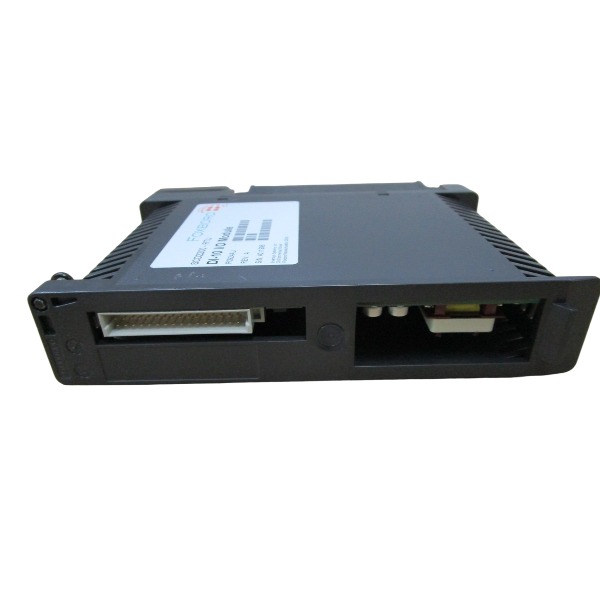
The MC-31 is a dedicated multi-port communication expansion module designed for the Foxboro SCD2200 modular RTU rack. It cannot work as a standalone unit and must cooperate with the CP-3 CPU module, backplane bus, power supply and I/O modules. Its primary function acts as a communication gateway connecting the RTU CPU, local field equipment and remote SCADA host, undertaking protocol conversion, data framing, transmission scheduling and link management.
1. Overall System Architecture
The SCD2200 rack adopts a shared backplane bus. The CP-3 CPU runs control logic, scans I/O modules and stores data. The MC-31 is plugged into the backplane and exchanges data with the CPU through the internal rack bus. It offers multiple external communication interfaces to establish redundant or multi-media telemetry links for unmanned remote sites such as pipelines, wellheads and pump stations.
2. Hardware Composition of MC-31
Fixed 10/100BASE-T Ethernet port for IP-based SCADA communication
Two configurable expansion slots compatible with optional daughter interface cards, including isolated RS232/RS422/RS485 serial, PSTN dial-up, leased line, spread-spectrum radio, fiber optic and HART multi-drop adapters
Onboard communication controller, buffer memory and isolated signal circuits
Status LEDs used for link activity and fault diagnostics
3. Data Exchange with CPU via Backplane
The CP-3 CPU cyclically publishes process values, alarm statuses, event timestamps and computed data onto the rack backplane. The MC-31 reads such data into its transmit buffer. Upon receiving commands, setpoints or polling requests from the SCADA host or field instruments, the MC-31 forwards the received messages to the CPU over the backplane bus. It electrically isolates external communication media from the CPU, protecting the core processor against surge voltage and noise interference.
4. Protocol Encapsulation and Decapsulation
The MC-31 supports widely used SCADA protocols such as DNP3, Modbus RTU/TCP and HART.
Upload direction: It encapsulates real-time analog and digital values, alarm markers and sequence-of-event logs from the CPU into protocol frames, then transmits the frames through Ethernet, serial or radio links.
Downlink direction: It interprets host instructions including remote setpoint adjustment, valve switching and polling requests, converts these instructions into backplane messages and delivers them to the CP-3. It also polls local serial slave devices such as flow computers and transmitters and transfers collected data to the CPU.
.jpg "SCD2200 MC-31 (2).jpg")
5. Multi-link and Redundancy Scheduling Principle
Multiple MC-31 modules can be installed within a single SCD2200 rack. Each MC-31 can operate different communication media concurrently, for example Ethernet, radio and dial-up backup. The module performs link health checks by monitoring heartbeat signals and frame loss. When the primary communication channel fails, it automatically switches data transmission to the standby path without disrupting the local control logic executed by the CP-3. Local control and safety interlocks keep running independently even if the connection to the remote host is lost.
6. Time Synchronization and Event Timestamping
The MC-31 supports time synchronization via SNTP over Ethernet or time messages issued by the SCADA master. It distributes the time reference to the CP-3 to ensure all alarm and trip events are recorded with uniform and precise timestamps, facilitating sequence-of-event analysis for incidents including pipeline overpressure, gas leakage and substation faults.
7. Diagnostics and Fault Reporting
The MC-31 continuously monitors physical layer conditions such as Ethernet link dropout, loss of serial signals, modem or radio carrier failure, and internal circuit health. It uploads communication faults as diagnostic tags to the CPU via the backplane, and the CPU further transmits these fault codes to the SCADA host. This module does not execute control logic itself; it only reports link failures, while protection and interlock decisions remain the responsibility of the CP-3.
8. Operating Sequence Summary
AI/DI modules capture signals from field sensors and contact devices and send the data to the CP-3 over the backplane.
The CP-3 executes IEC 61131 control logic, PID calculation and alarm threshold comparison.
The CP-3 writes process data and event records into the shared memory of the backplane.
The MC-31 retrieves data from the backplane, encapsulates it into configured protocol frames and sends it to the central SCADA host via Ethernet, radio or serial media.
The MC-31 receives remote commands from the host, decodes the frames and forwards requests to the CP-3 through the backplane.
The CP-3 verifies received commands, drives AO/DO output modules and implements local safety logic.
The MC-31 monitors all communication links and triggers channel switching once media failure is detected.
.jpg "SCD2200 MC-31 (3).jpg")
Application Cases of Foxboro SCD2200 MC-31
The SCD2200 MC-31 is a modular RTU communication module within the Foxboro SCD2200 remote terminal unit platform. It is developed for distributed SCADA telemetry, remote data collection and local sequential control in unmanned field locations.
Oil & Gas Pipeline Block Valve Station
It is deployed at remote pipeline block valve stations to gather pressure, temperature, flow rate and valve position signals. The module enables local valve shutdown when overpressure or underpressure conditions are detected. It transmits time-tagged process data and alarm events to the central Geo SCADA Expert host over DNP3 or Modbus protocols, and supports redundant communication links for long-distance pipeline monitoring.
Wellhead and Tank Farm Monitoring
It is installed at onshore oil wellheads and crude oil tank farms. The module monitors wellhead pressure, casing pressure, liquid level and pump operating status. It carries out automatic start-stop control of production pumps on site and delivers custody transfer metering data to the central control room. It can operate stably under wide temperature variations in remote field environments.
Power Distribution Substation Telecontrol
It serves remote monitoring and recloser control tasks for distribution feeders. It collects switch status, voltage, current and power measurements, executes remote opening and closing commands, detects faults and isolates faulty sections. Electrical telemetry data is uploaded to the power dispatching SCADA platform.
Water Supply and Wastewater Pumping Station
It is adopted in unattended remote pumping stations, reservoirs and sewage lift stations. It monitors tank liquid level, pipeline pressure and pump operating current, implements automatic pump start-stop logic and overflow protection. Operators can set operation schedules and handle alarms from the central control room of the water plant.
Urban Gas Pressure Regulation Station
It is equipped at urban gas pressure regulating stations to measure inlet and outlet gas pressure, flow and temperature. It initiates emergency shutdown of pressure regulators when pressure goes out of limits, archives gas flow data for billing purposes, and sends leakage alarms to the gas management system.
Renewable Energy Microgrid and Solar Field
It aggregates data from solar combiner boxes, battery energy storage equipment and grid-tied inverters. It executes local islanding protection and grid connection sequential logic, and transmits operational information to the renewable energy monitoring platform.
Offshore and Onshore Petrochemical Remote Skids
It is fitted on remote process skids of chemical and LNG plants. It acquires signals from transmitters and on-off valves, runs simple safety interlock logic separate from the main DCS, and forwards process data to the Foxboro I/A Series control system.
Mining Conveyor and Remote Infrastructure
It is used for belt conveyor protection and auxiliary utility monitoring in mining sites. It collects signals from emergency stop switches, pull cords, speed sensors and bearing temperature detectors, triggers local conveyor trip protection, and uploads equipment status and diagnostic data to the mine SCADA host.



.jpg)