











Description
-
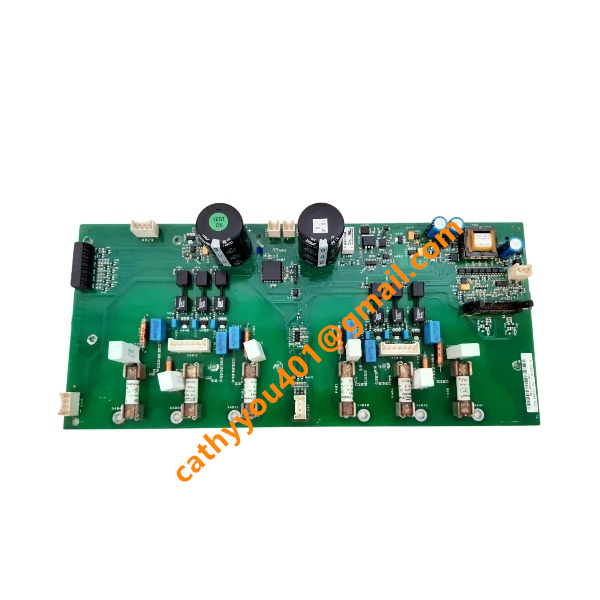
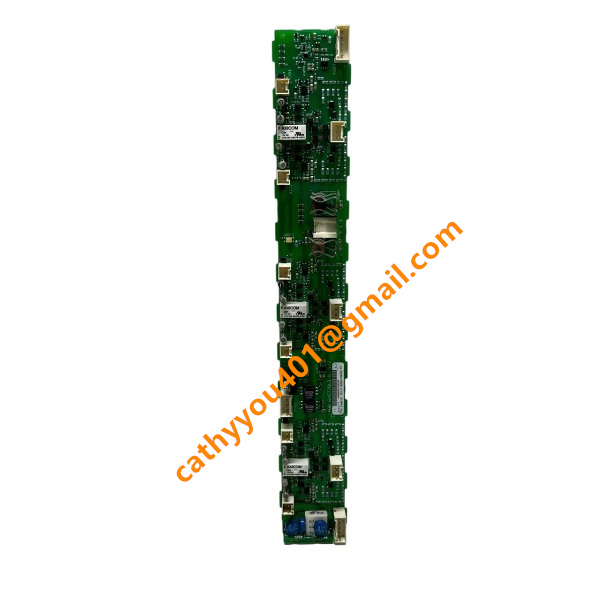
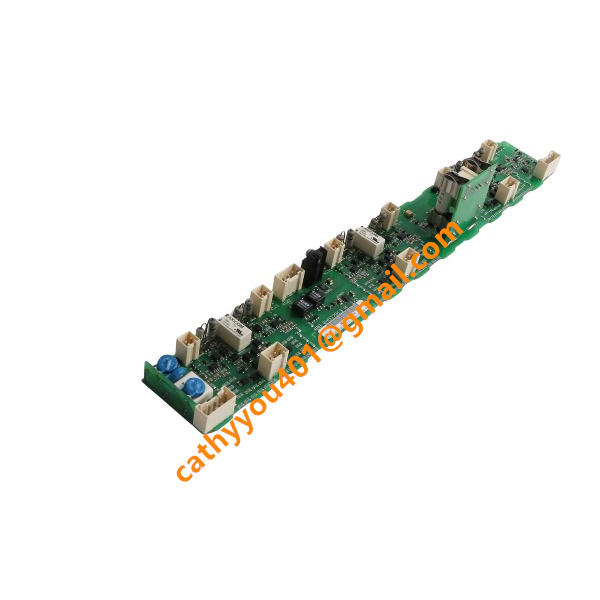
BrandABB
-
ModelDSMB-02C
-
Product NameMaster‑Slave Synchronization Communication Board
-
Dimensions195 mm × 72 mm × 35 mm
-
Weight0.32 kg
-
Place of OriginSweden
-
HS Code85437099
-
Operating Temperature0.32 kg
-
Storage Temperature-40°C to +85°C
-
Power Supply130mA
-
Warranty1 year
-
Statusoriginal
ABB DSMB-02C Product Features
Tailored for ABB ACS800 AC drives and DCS800 DC drive platforms, this module functions as a fiber-optic master-slave synchronization coupler built for multi-motor drive setups.
High-speed optical communication provides full galvanic isolation, which efficiently suppresses electromagnetic interference generated within high-power industrial environments.
It supports master-slave control with a maximum of 10 slave drives, precisely transferring speed instructions, torque references and real-time feedback signals among individual drive units.
Built-in LED status indicators display power condition as well as optical transmit and receive status, allowing intuitive fault identification and convenient on-site diagnostics.
It guarantees highly-synchronized running of multiple drives, reducing phase offset and unbalanced load sharing for heavy-duty multi-axis mechanical machinery.
Adopting a compact plug-in modular PCB construction, it allows straightforward installation and quick replacement to cut system downtime and maintenance efforts.
With an extended industrial temperature tolerance, it sustains steady continuous operation in demanding plant surroundings featuring intense vibration and electrical noise.
It achieves accurate timing alignment for control pulses of paralleled power units, preventing power hardware from overload damage triggered by asynchronous operation.
A durable multi-layer PCB layout enhances signal integrity and noise immunity, securing dependable long-term system performance.
Fully compatible with native drive firmware; basic master-slave synchronization commissioning can be completed without additional supporting software.

ABB DSMB-02C Common Faults & Solutions
Optical communication failure / Loss of optical link
Fault phenomenon: The transmit or receive LED stays dark; master-slave drives generate communication-loss alarms.
Solutions: Inspect fibre cables for breaks, improper bending radius and dirty connectors; reseat and clean optical connectors; confirm correct TX-RX cross-connection between master and slave DSMB-02C units; substitute defective fibre cables where required.
Intermittent loss of master-slave synchronization
Fault phenomenon: Synchronous signals fluctuate sporadically, accompanied by random load imbalance or speed oscillation.
Solutions: Check for loosely fitted optical connectors; separate fibre routes from high-power cables; rule out connector loosening induced by mechanical vibration; ensure uniform firmware versions across all connected drives; mitigate severe on-site electromagnetic noise.
Unbalanced load distribution across multi-drive groups
Fault phenomenon: Certain slave drives exhibit abnormal torque offset, resulting in over-loading or under-loading conditions.
Solutions: Double-check accurate master-slave parameter setup for every drive; evaluate optical signal attenuation levels; recalibrate torque- and speed-related synchronization parameters; make sure the coupled mechanical equipment is free from jamming resistance.
Power-on power-LED inoperative
Fault phenomenon: The DSMB-02C power-supply LED remains unlit and the module cannot complete initialization.
Solutions: Examine the auxiliary power supply for the control unit; ensure the module is fully inserted into the drive option slot; check slot contacts for bent pins or oxidation; replace the module if its internal power circuit suffers damage.
Synchronisation timing mismatch alarm
Fault phenomenon: The drive reports timing-error alerts, and multi-axis equipment runs out-of-sync.
Solutions: Guarantee only one master drive is configured within the whole system; restrict the number of slave units to no more than 10; keep optical-path delay consistent for all channels; save updated synchronization settings and reboot all drive units.
Drive fails to identify the hardware module
Fault phenomenon: The drive operator panel cannot detect the DSMB-02C even after physical installation.
Solutions: Power down the drive and re-insert the DSMB-02C firmly; check the gold-plated edge connector for pin damage; validate that the drive firmware supports this option board; swap in a known-good spare module for verification testing.

GDB021BE
Unitrol 1020
698B275U01
SM810K01
BC810K02
PP886
PBA800
RED615